Buying a Portable X-Ray Machine in India: Complete Checklist for Procurement Teams
Buying a Portable X-Ray Machine in India: Complete Checklist for Procurement Teams

Most procurement problems with medical equipment don’t happen after purchase. They happen before it during evaluation, when the wrong criteria get applied, compliance gets assumed rather than verified, and the full cost picture stays incomplete until it’s too late to change direction.
This checklist is for hospital procurement teams, government health department officers, and NGO medical directors evaluating portable X-ray systems for clinical use in India. It won’t tell you which product to buy. It will tell you what to check before you decide.
Step 1 — Verify AERB approval (Non-Negotiable)
Every X-ray machine used in India requires type approval from the Atomic Energy Regulatory Board (AERB). This is a legal requirement, not an optional quality marker.
Do not accept a supplier’s word on this. Verify it yourself:
1. Ask for the AERB type approval certificate number
2. Check it on aerb.gov.in — search by manufacturer or certificate number
3. Confirm the certificate covers the exact model you are procuring
4. Check the certificate has not expired
Foreign approvals (FDA, CE) do not substitute for AERB in India. A device with US FDA clearance still needs AERB approval to be used legally in an Indian clinical environment.
Step 2 — Check the Manufacturer’s Service Network
This is the step that gets skipped most often, and the one that causes the most problems post-purchase.
Questions to ask every supplier:
The questions to ask every supplier, before you look at specifications:
Where is the nearest service centre to your facility?
What’s the average turnaround time on a service call?
Are spare parts stocked in India, or imported to order?
Who do you call if the machine fails during a remote field deployment?
Imported equipment often fails here. A US or Korean manufacturer may have no service presence in India beyond a distributor who handles sales, not repairs. When the machine breaks six months post-purchase, the nearest authorised technician may be weeks away.
For a government programme deploying equipment across remote districts, or an NGO running field camps, this is not a hypothetical risk — it is the most predictable failure mode in medical equipment procurement.
Step 3 — Evaluate Battery Life Against Your Use Case
Battery specifications on portable X-ray machines are typically expressed as exposure count per charge. The number that matters is not the theoretical maximum under ideal conditions — it is the practical count in your specific clinical environment.
Ask the supplier: how many exposures does the device deliver per full charge under normal clinical conditions? Then cross-reference this against your expected daily usage.
A device rated at 150 exposures per charge running 40 exposures per day gives you three to four days of field use between charges. A device rated at 80 exposures running the same load needs charging every two days — which matters if you are operating in areas without reliable power.
Step 4 — Confirm Flat Panel Detector Compatibility
Portable X-ray machines require a detector to capture the image. Most modern systems use digital radiography (DR) flat panel detectors (FPDs), which produce digital images immediately and can connect to hospital PACS systems.
Before signing anything, check:
Does the quoted price include a detector, or is it the generator only?
Which detector brands and panel sizes is the generator compatible with?
If your facility already owns detectors, will they work with this system?
Some portable systems are sold without detectors to appear cheaper in initial price comparisons. Get the total cost of a usable, complete system before comparing figures across suppliers.
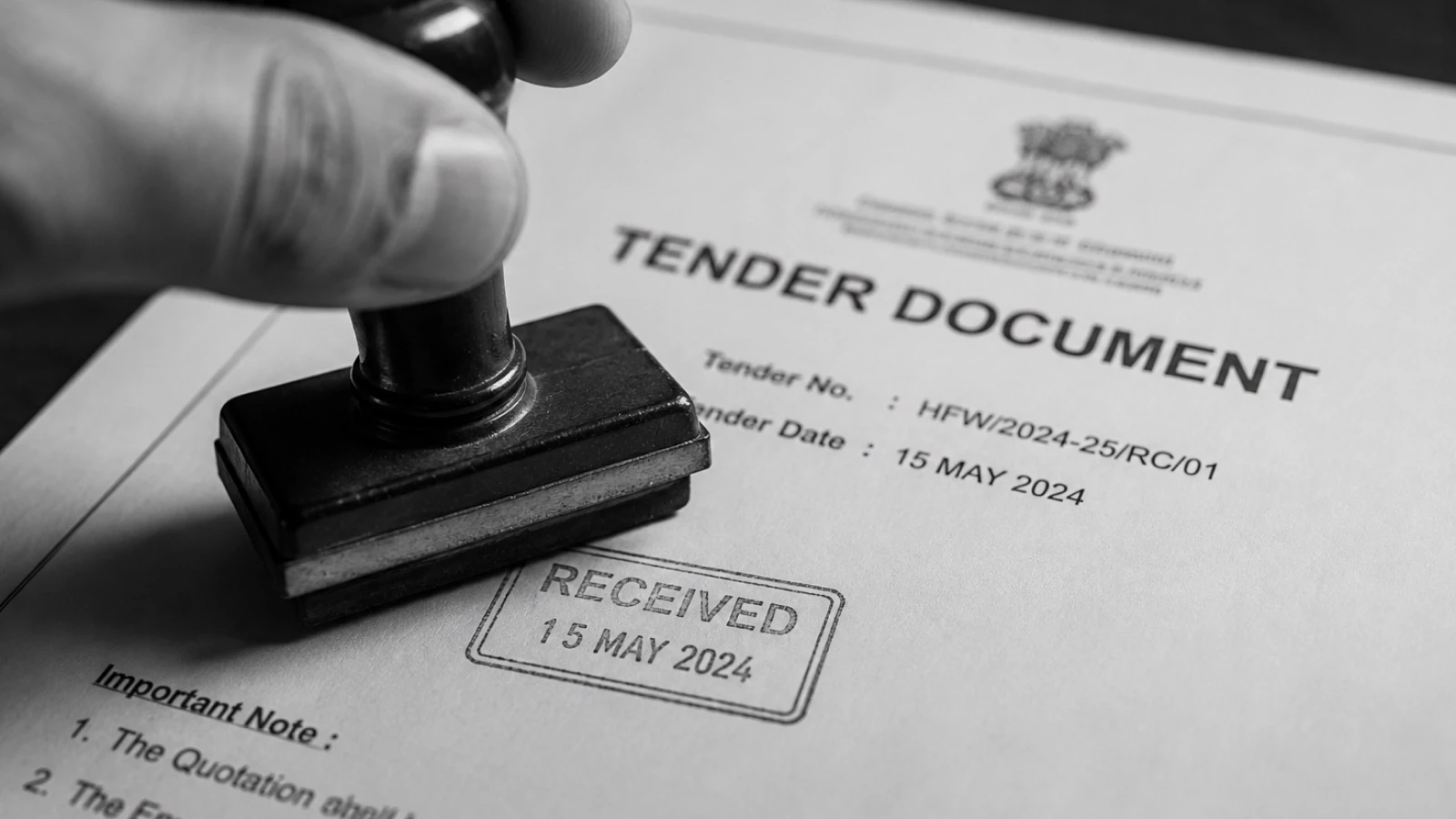
Step 5 — Request the Full Compliance Documentation Package
For government procurement, hospital accreditation, or tender submission, you will need a documentation package from the manufacturer.
The standard package should include:
AERB type approval certificate (original or notarised copy)
ISO 13485:2016 certification
ISO 9001:2015 certification
GMP compliance certificate
BIS certification (for India-manufactured equipment)
Test reports from a NABL-accredited laboratory
Declaration of conformity
User manual and radiation safety documentation
Reputable manufacturers have this documentation ready. If a supplier delays providing it or provides incomplete copies, treat that as a risk signal.
Step 6 — Calculate Total Cost of Ownership, Not Just Purchase Price
The purchase price of portable X-ray equipment is rarely the full financial picture. Before comparing quotes across suppliers, establish the five-year cost, which includes:
Build a five-year cost estimate that includes:
Equipment purchase price
Flat panel detector cost (if not bundled)
Annual maintenance contract or per-service call cost
Spare parts pricing and availability
Operator training costs
Service technician travel costs (particularly relevant for remote deployments)
Imported equipment from US or Korean manufacturers may have a comparable or lower purchase price but significantly higher lifetime service costs when technicians need to be flown in or parts need to be imported. Indian-manufactured, AERB-approved equipment with a local service network typically has lower total ownership costs over a five-year period.
Step 7 — Ask for a Demonstration Before Committing
Any reputable portable X-ray manufacturer will demonstrate the product before purchase. If a supplier is reluctant to do this, that’s information.
Request the demonstration at your facility or at an existing customer site. During it, pay attention to:
How long setup takes from carrying case to first exposure
Image quality on the anatomy types you most commonly image
How straightforward the controls are for non-specialist operators
Battery indicator reliability and how much warning it gives before shutdown
The last point matters more than most teams expect. A system that drops from 30% to zero without warning is a clinical problem in the middle of a field deployment.
Step 8 — Verify Make-in-India Status for Government Procurement
Government health programmes — NHM, PMJAY, state health department tenders — regularly give procurement preference to domestically manufactured equipment under Make in India policy. If you’re procuring for a government programme, this is worth verifying formally rather than assuming.
Indian-manufactured equipment should carry Make in India certification, and the manufacturer should be registered with DPIIT. Ask to see both before submitting a tender recommendation.
Beyond the procurement preference, Indian-manufactured equipment with a domestic service network has practical advantages for government deployments in remote districts that no foreign manufacturer can easily replicate.
Read the government X-ray procurement guide →
Frequently Asked Questions
Q: What certifications are mandatory for a portable X-ray machine in India?
A: AERB type approval is mandatory. ISO 13485:2016, ISO 9001:2015, GMP, and BIS certifications are not legally mandatory but indicate a manufacturer meeting recognised quality standards. For government procurement, Make in India certification is additionally relevant.
Q: Can I use an imported portable X-ray machine in India without AERB approval?
A: No. Imported X-ray equipment requires AERB type approval for legal use in India, regardless of what foreign regulatory approvals it carries. FDA or CE certification does not substitute for AERB.
Q: What should I ask a supplier to prove their service capability?
A: Ask for the location of their nearest service centre, average turnaround time for a repair call, whether spare parts are held in India or imported, and for references from existing customers in your region.
Q: Does Humanic India supply compliance documentation for government tenders?
A: Yes. Humanic India provides a complete compliance documentation package with every purchase, including AERB certificate, ISO certifications, GMP compliance, NABL test reports, and Make in India certification.
Most procurement problems with medical equipment don’t happen after purchase. They happen before it during evaluation, when the wrong criteria get applied, compliance gets assumed rather than verified, and the full cost picture stays incomplete until it’s too late to change direction.
This checklist is for hospital procurement teams, government health department officers, and NGO medical directors evaluating portable X-ray systems for clinical use in India. It won’t tell you which product to buy. It will tell you what to check before you decide.
Step 1 — Verify AERB approval (Non-Negotiable)
Every X-ray machine used in India requires type approval from the Atomic Energy Regulatory Board (AERB). This is a legal requirement, not an optional quality marker.
Do not accept a supplier’s word on this. Verify it yourself:
1. Ask for the AERB type approval certificate number
2. Check it on aerb.gov.in — search by manufacturer or certificate number
3. Confirm the certificate covers the exact model you are procuring
4. Check the certificate has not expired
Foreign approvals (FDA, CE) do not substitute for AERB in India. A device with US FDA clearance still needs AERB approval to be used legally in an Indian clinical environment.
Step 2 — Check the Manufacturer’s Service Network
This is the step that gets skipped most often, and the one that causes the most problems post-purchase.
Questions to ask every supplier:
The questions to ask every supplier, before you look at specifications:
Where is the nearest service centre to your facility?
What’s the average turnaround time on a service call?
Are spare parts stocked in India, or imported to order?
Who do you call if the machine fails during a remote field deployment?
Imported equipment often fails here. A US or Korean manufacturer may have no service presence in India beyond a distributor who handles sales, not repairs. When the machine breaks six months post-purchase, the nearest authorised technician may be weeks away.
For a government programme deploying equipment across remote districts, or an NGO running field camps, this is not a hypothetical risk — it is the most predictable failure mode in medical equipment procurement.
Step 3 — Evaluate Battery Life Against Your Use Case
Battery specifications on portable X-ray machines are typically expressed as exposure count per charge. The number that matters is not the theoretical maximum under ideal conditions — it is the practical count in your specific clinical environment.
Ask the supplier: how many exposures does the device deliver per full charge under normal clinical conditions? Then cross-reference this against your expected daily usage.
A device rated at 150 exposures per charge running 40 exposures per day gives you three to four days of field use between charges. A device rated at 80 exposures running the same load needs charging every two days — which matters if you are operating in areas without reliable power.
Step 4 — Confirm Flat Panel Detector Compatibility
Portable X-ray machines require a detector to capture the image. Most modern systems use digital radiography (DR) flat panel detectors (FPDs), which produce digital images immediately and can connect to hospital PACS systems.
Before signing anything, check:
Does the quoted price include a detector, or is it the generator only?
Which detector brands and panel sizes is the generator compatible with?
If your facility already owns detectors, will they work with this system?
Some portable systems are sold without detectors to appear cheaper in initial price comparisons. Get the total cost of a usable, complete system before comparing figures across suppliers.
Step 5 — Request the Full Compliance Documentation Package
For government procurement, hospital accreditation, or tender submission, you will need a documentation package from the manufacturer.
The standard package should include:
AERB type approval certificate (original or notarised copy)
ISO 13485:2016 certification
ISO 9001:2015 certification
GMP compliance certificate
BIS certification (for India-manufactured equipment)
Test reports from a NABL-accredited laboratory
Declaration of conformity
User manual and radiation safety documentation
Reputable manufacturers have this documentation ready. If a supplier delays providing it or provides incomplete copies, treat that as a risk signal.
Step 6 — Calculate Total Cost of Ownership, Not Just Purchase Price
The purchase price of portable X-ray equipment is rarely the full financial picture. Before comparing quotes across suppliers, establish the five-year cost, which includes:
Build a five-year cost estimate that includes:
Equipment purchase price
Flat panel detector cost (if not bundled)
Annual maintenance contract or per-service call cost
Spare parts pricing and availability
Operator training costs
Service technician travel costs (particularly relevant for remote deployments)
Imported equipment from US or Korean manufacturers may have a comparable or lower purchase price but significantly higher lifetime service costs when technicians need to be flown in or parts need to be imported. Indian-manufactured, AERB-approved equipment with a local service network typically has lower total ownership costs over a five-year period.
Step 7 — Ask for a Demonstration Before Committing
Any reputable portable X-ray manufacturer will demonstrate the product before purchase. If a supplier is reluctant to do this, that’s information.
Request the demonstration at your facility or at an existing customer site. During it, pay attention to:
How long setup takes from carrying case to first exposure
Image quality on the anatomy types you most commonly image
How straightforward the controls are for non-specialist operators
Battery indicator reliability and how much warning it gives before shutdown
The last point matters more than most teams expect. A system that drops from 30% to zero without warning is a clinical problem in the middle of a field deployment.
Step 8 — Verify Make-in-India Status for Government Procurement
Government health programmes — NHM, PMJAY, state health department tenders — regularly give procurement preference to domestically manufactured equipment under Make in India policy. If you’re procuring for a government programme, this is worth verifying formally rather than assuming.
Indian-manufactured equipment should carry Make in India certification, and the manufacturer should be registered with DPIIT. Ask to see both before submitting a tender recommendation.
Beyond the procurement preference, Indian-manufactured equipment with a domestic service network has practical advantages for government deployments in remote districts that no foreign manufacturer can easily replicate.
Read the government X-ray procurement guide →
Frequently Asked Questions
Q: What certifications are mandatory for a portable X-ray machine in India?
A: AERB type approval is mandatory. ISO 13485:2016, ISO 9001:2015, GMP, and BIS certifications are not legally mandatory but indicate a manufacturer meeting recognised quality standards. For government procurement, Make in India certification is additionally relevant.
Q: Can I use an imported portable X-ray machine in India without AERB approval?
A: No. Imported X-ray equipment requires AERB type approval for legal use in India, regardless of what foreign regulatory approvals it carries. FDA or CE certification does not substitute for AERB.
Q: What should I ask a supplier to prove their service capability?
A: Ask for the location of their nearest service centre, average turnaround time for a repair call, whether spare parts are held in India or imported, and for references from existing customers in your region.
Q: Does Humanic India supply compliance documentation for government tenders?
A: Yes. Humanic India provides a complete compliance documentation package with every purchase, including AERB certificate, ISO certifications, GMP compliance, NABL test reports, and Make in India certification.
Get in touch for detailed information about our product and services
Get in touch for detailed information about our product and services


Address:
E-21, Ground Floor, B-1 Ext., Mohan Cooperative Industrial Estate, Mathura Road, Badarpur,
New Delhi - 110044, India
Phone
(WhatsApp):
+91-9990455744
Email:
Address:
E-21, Ground Floor, B-1 Ext.,
Mohan Cooperative Industrial Estate, Mathura Road, Badarpur,
New Delhi - 110044, India
Phone
(WhatsApp):
+91-9990455744
Email:
Address:
E-21, Ground Floor, B-1 Ext., Mohan Cooperative
Industrial Estate,
Mathura Road, Badarpur,
New Delhi - 110044, India
Phone
(WhatsApp):
+91-9990455744
Email: