How Government Health Departments Procure X-Ray Equipment in India: A Practical Guide
How Government Health Departments Procure X-Ray Equipment in India: A Practical Guide

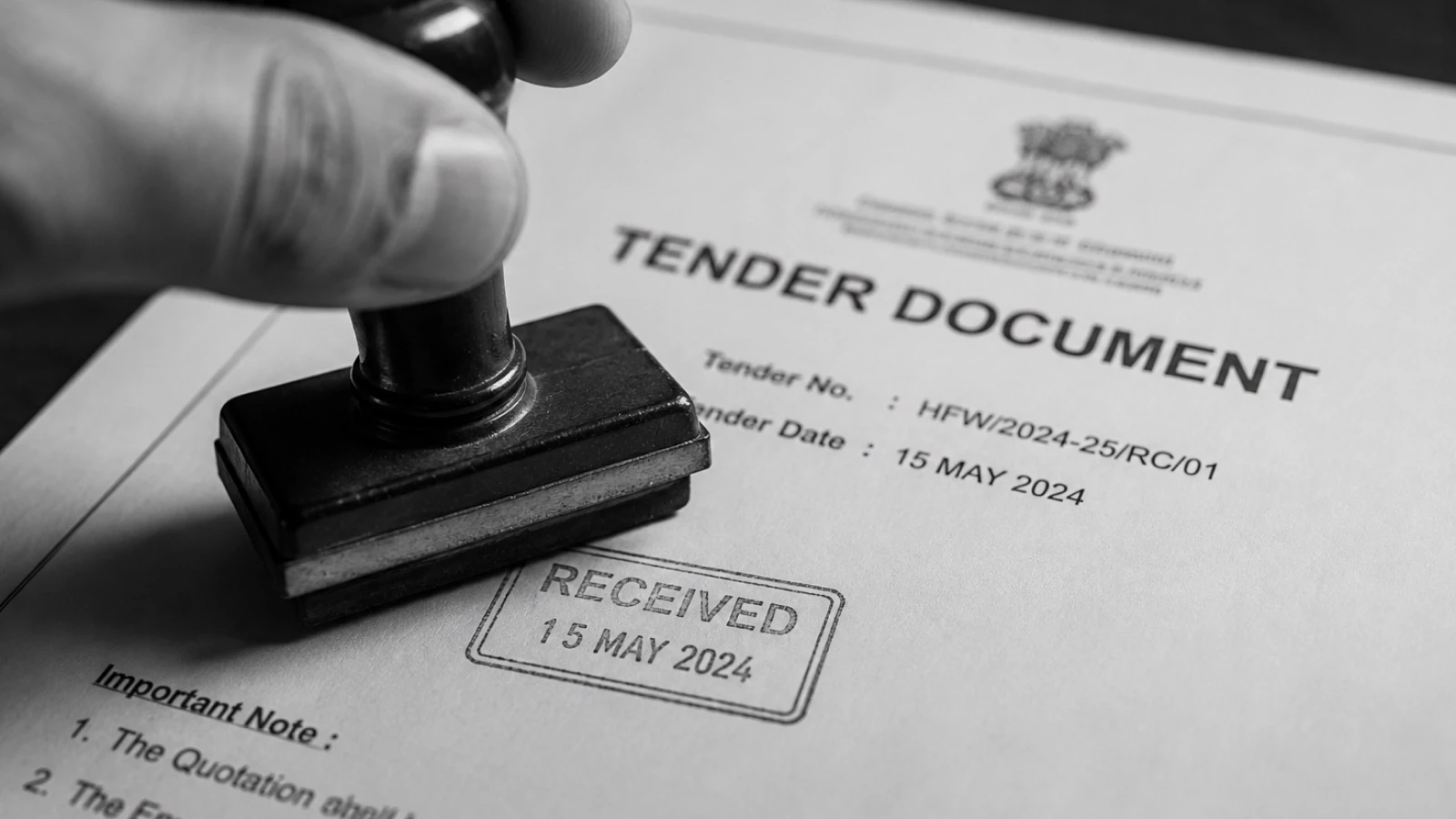
Government procurement of medical equipment in India is more tightly regulated than private hospital purchasing, and for good reason. Public funds, accountability obligations, and the requirement to serve populations across varied geographies all create a procurement environment where the wrong decision has consequences that extend beyond a single facility.
X-ray equipment procurement for government health departments and NHM programmes sits at the intersection of several overlapping frameworks: AERB radiation safety regulations, General Financial Rules (GFR) procurement procedures, the Public Procurement (Preference to Make-in-India) Policy, and in some cases, NABL and NABH accreditation requirements.
This guide is for procurement officers and programme managers handling these purchases. It covers the compliance requirements, tender documentation, and vendor evaluation criteria that apply.
The regulatory baseline: what AERB requires
Before any other consideration, the equipment must hold AERB type approval. This applies to all X-ray machines used in India — fixed or portable, hospital-grade or handheld, imported or domestically manufactured.
For government procurement purposes, AERB approval serves two functions: it's a mandatory compliance requirement for lawful operation, and it's a standard tender requirement for most state government and NHM procurement processes.
The verification step that procurement officers should do — and often don't — is confirming that the certificate presented by the vendor covers the exact model being tendered. A supplier may hold AERB approval for an older model in their range while quoting a newer variant. The AERB equipment registry at aerb.gov.in takes about 10–15 minutes to check and surfaces this immediately.
Make-in-India preference in medical device procurement
The Public Procurement (Preference to Make in India) Order 2017, and its subsequent revisions, establishes preference for Indian-manufactured goods in government procurement. For medical devices including X-ray equipment, this policy has meaningful implications for vendor evaluation and price preference calculations.
Under the policy, domestically manufactured products are given a purchase price preference — the percentage preference varies by product category and is updated periodically. For procurement officers, the practical implication is that an imported product quoted at a lower base price may still be outscored by a domestically manufactured product when the preference calculation is applied.
Procurement officers should check the current classification for the specific equipment category before issuing the tender, as these designations are updated and the applicable rules may have changed since the last procurement cycle.
Quality documentation requirements for tender submission
Beyond AERB approval, a government tender for X-ray equipment typically requires a package of compliance and quality documentation.
Mandatory for most government tenders: AERB type approval certificate (model-specific, current). ISO 13485:2016 certificate (medical devices quality management system). GMP certificate (Good Manufacturing Practice compliance).
Frequently required: ISO 9001:2015 certificate. BIS certification. NABL accreditation of the manufacturer's QA testing laboratory. Technical data sheet for the specific model being supplied.
For imported equipment, additionally: Import licence. Foreign manufacturer's authorisation to the Indian agent. Country-of-origin certification.
One practical issue that arises frequently: vendors supply certificates that cover the manufacturer's company name without clearly specifying which model or product line the certificate applies to. Procurement officers may need to ask vendors to provide supplementary documentation confirming which models are manufactured under the certified quality system.
Evaluating portable vs. fixed X-ray for government programmes
Government health programme purchases increasingly specify portable rather than fixed X-ray equipment, particularly for PHC-level and community health programmes.
Fixed X-ray installations are appropriate when: the facility has sufficient patient volume to justify a dedicated radiographer, the space and electrical infrastructure for a shielded room is available or can be constructed, and the programme goal is to upgrade a specific facility to a permanent diagnostic hub.
Portable X-ray is appropriate when: the programme covers multiple facilities or a geographic circuit, fixed shielded room installation isn't feasible or cost-justified, the deployment includes outdoor health camps or mobile health units, and the operating environment includes areas without reliable mains power.
AMC (Annual Maintenance Contract) terms: what to look for
Government procurement regulations under GFR require that medical equipment purchases include provision for maintenance and support. AMC terms are often specified in the tender itself, and vendors are expected to quote the AMC cost as part of their overall commercial offer.
For X-ray equipment, the AMC should cover: preventive maintenance visits at specified intervals, breakdown repair response time commitments, spare parts availability and lead times, and whether on-site service is included or equipment needs to be returned to the manufacturer.
When evaluating vendors on service, ask for a list of service locations and response time commitments in the specific districts where the equipment will be deployed.
Lifecycle costs and the import premium
A point worth raising explicitly in government procurement evaluations: the headline purchase price of imported equipment needs to be considered alongside deployment timelines and lifecycle costs.
Imported X-ray systems need AERB type approval completed in India before they can be operated — this process takes time and may delay deployment. Customs clearance and import duties add to the landed cost. After-sales service relies on the importer's support infrastructure, which varies considerably.
Domestically manufactured equipment from a manufacturer that has already completed AERB type approval, maintains an Indian service network, and holds current quality certifications eliminates most of these uncertainties. The comparative evaluation should account for deployment readiness, service support, and spare parts availability not just the purchase price line.
Frequently Asked Questions
Is AERB type approval mandatory for government tender compliance?
Yes. AERB type approval for the specific model being supplied is a mandatory compliance requirement for all government procurement of X-ray equipment in India. It must be verified against the equipment registry on aerb.gov.in, and the certificate should be model-specific.
What Make-in-India preference applies to portable X-ray procurement?
Under the Public Procurement (Preference to Make in India) Order, domestically manufactured medical devices are eligible for purchase price preference in government tenders. The applicable preference percentage and category classification should be checked against the current policy before issuing a tender.
Does Humanic supply compliance documentation for tender submissions?
Yes. A full compliance documentation package — including AERB certificates, ISO 13485, ISO 9001, NABL, GMP, and BIS certificates, along with technical data sheets — is available for tender submissions.
Can Humanic provide AMC services for government programme deployments?
Yes. Annual maintenance contracts with defined service visit schedules, breakdown response commitments, and spare parts coverage are available for government programme deployments. Service coverage spans major cities and district-level locations across India.
What is the delivery timeline for government programme bulk orders?
Delivery timelines depend on order volume and dispatch schedule. Government programme procurement enquiries should include delivery location, quantity, and required timeline for an accurate response.
Government procurement of medical equipment in India is more tightly regulated than private hospital purchasing, and for good reason. Public funds, accountability obligations, and the requirement to serve populations across varied geographies all create a procurement environment where the wrong decision has consequences that extend beyond a single facility.
X-ray equipment procurement for government health departments and NHM programmes sits at the intersection of several overlapping frameworks: AERB radiation safety regulations, General Financial Rules (GFR) procurement procedures, the Public Procurement (Preference to Make-in-India) Policy, and in some cases, NABL and NABH accreditation requirements.
This guide is for procurement officers and programme managers handling these purchases. It covers the compliance requirements, tender documentation, and vendor evaluation criteria that apply.
The regulatory baseline: what AERB requires
Before any other consideration, the equipment must hold AERB type approval. This applies to all X-ray machines used in India — fixed or portable, hospital-grade or handheld, imported or domestically manufactured.
For government procurement purposes, AERB approval serves two functions: it's a mandatory compliance requirement for lawful operation, and it's a standard tender requirement for most state government and NHM procurement processes.
The verification step that procurement officers should do — and often don't — is confirming that the certificate presented by the vendor covers the exact model being tendered. A supplier may hold AERB approval for an older model in their range while quoting a newer variant. The AERB equipment registry at aerb.gov.in takes about 10–15 minutes to check and surfaces this immediately.
Make-in-India preference in medical device procurement
The Public Procurement (Preference to Make in India) Order 2017, and its subsequent revisions, establishes preference for Indian-manufactured goods in government procurement. For medical devices including X-ray equipment, this policy has meaningful implications for vendor evaluation and price preference calculations.
Under the policy, domestically manufactured products are given a purchase price preference — the percentage preference varies by product category and is updated periodically. For procurement officers, the practical implication is that an imported product quoted at a lower base price may still be outscored by a domestically manufactured product when the preference calculation is applied.
Procurement officers should check the current classification for the specific equipment category before issuing the tender, as these designations are updated and the applicable rules may have changed since the last procurement cycle.
Quality documentation requirements for tender submission
Beyond AERB approval, a government tender for X-ray equipment typically requires a package of compliance and quality documentation.
Mandatory for most government tenders: AERB type approval certificate (model-specific, current). ISO 13485:2016 certificate (medical devices quality management system). GMP certificate (Good Manufacturing Practice compliance).
Frequently required: ISO 9001:2015 certificate. BIS certification. NABL accreditation of the manufacturer's QA testing laboratory. Technical data sheet for the specific model being supplied.
For imported equipment, additionally: Import licence. Foreign manufacturer's authorisation to the Indian agent. Country-of-origin certification.
One practical issue that arises frequently: vendors supply certificates that cover the manufacturer's company name without clearly specifying which model or product line the certificate applies to. Procurement officers may need to ask vendors to provide supplementary documentation confirming which models are manufactured under the certified quality system.
Evaluating portable vs. fixed X-ray for government programmes
Government health programme purchases increasingly specify portable rather than fixed X-ray equipment, particularly for PHC-level and community health programmes.
Fixed X-ray installations are appropriate when: the facility has sufficient patient volume to justify a dedicated radiographer, the space and electrical infrastructure for a shielded room is available or can be constructed, and the programme goal is to upgrade a specific facility to a permanent diagnostic hub.
Portable X-ray is appropriate when: the programme covers multiple facilities or a geographic circuit, fixed shielded room installation isn't feasible or cost-justified, the deployment includes outdoor health camps or mobile health units, and the operating environment includes areas without reliable mains power.
AMC (Annual Maintenance Contract) terms: what to look for
Government procurement regulations under GFR require that medical equipment purchases include provision for maintenance and support. AMC terms are often specified in the tender itself, and vendors are expected to quote the AMC cost as part of their overall commercial offer.
For X-ray equipment, the AMC should cover: preventive maintenance visits at specified intervals, breakdown repair response time commitments, spare parts availability and lead times, and whether on-site service is included or equipment needs to be returned to the manufacturer.
When evaluating vendors on service, ask for a list of service locations and response time commitments in the specific districts where the equipment will be deployed.
Lifecycle costs and the import premium
A point worth raising explicitly in government procurement evaluations: the headline purchase price of imported equipment needs to be considered alongside deployment timelines and lifecycle costs.
Imported X-ray systems need AERB type approval completed in India before they can be operated — this process takes time and may delay deployment. Customs clearance and import duties add to the landed cost. After-sales service relies on the importer's support infrastructure, which varies considerably.
Domestically manufactured equipment from a manufacturer that has already completed AERB type approval, maintains an Indian service network, and holds current quality certifications eliminates most of these uncertainties. The comparative evaluation should account for deployment readiness, service support, and spare parts availability not just the purchase price line.
Frequently Asked Questions
Is AERB type approval mandatory for government tender compliance?
Yes. AERB type approval for the specific model being supplied is a mandatory compliance requirement for all government procurement of X-ray equipment in India. It must be verified against the equipment registry on aerb.gov.in, and the certificate should be model-specific.
What Make-in-India preference applies to portable X-ray procurement?
Under the Public Procurement (Preference to Make in India) Order, domestically manufactured medical devices are eligible for purchase price preference in government tenders. The applicable preference percentage and category classification should be checked against the current policy before issuing a tender.
Does Humanic supply compliance documentation for tender submissions?
Yes. A full compliance documentation package — including AERB certificates, ISO 13485, ISO 9001, NABL, GMP, and BIS certificates, along with technical data sheets — is available for tender submissions.
Can Humanic provide AMC services for government programme deployments?
Yes. Annual maintenance contracts with defined service visit schedules, breakdown response commitments, and spare parts coverage are available for government programme deployments. Service coverage spans major cities and district-level locations across India.
What is the delivery timeline for government programme bulk orders?
Delivery timelines depend on order volume and dispatch schedule. Government programme procurement enquiries should include delivery location, quantity, and required timeline for an accurate response.
Get in touch for detailed information about our product and services
Get in touch for detailed information about our product and services


Address:
E-21, Ground Floor, B-1 Ext., Mohan Cooperative Industrial Estate, Mathura Road, Badarpur,
New Delhi - 110044, India
Phone
(WhatsApp):
+91-9990455744
Email:
Address:
E-21, Ground Floor, B-1 Ext.,
Mohan Cooperative Industrial Estate, Mathura Road, Badarpur,
New Delhi - 110044, India
Phone
(WhatsApp):
+91-9990455744
Email:
Address:
E-21, Ground Floor, B-1 Ext., Mohan Cooperative
Industrial Estate,
Mathura Road, Badarpur,
New Delhi - 110044, India
Phone
(WhatsApp):
+91-9990455744
Email: