How India's NHM Programme Is Driving Demand for Mobile Diagnostics
How India's NHM Programme Is Driving Demand for Mobile Diagnostics
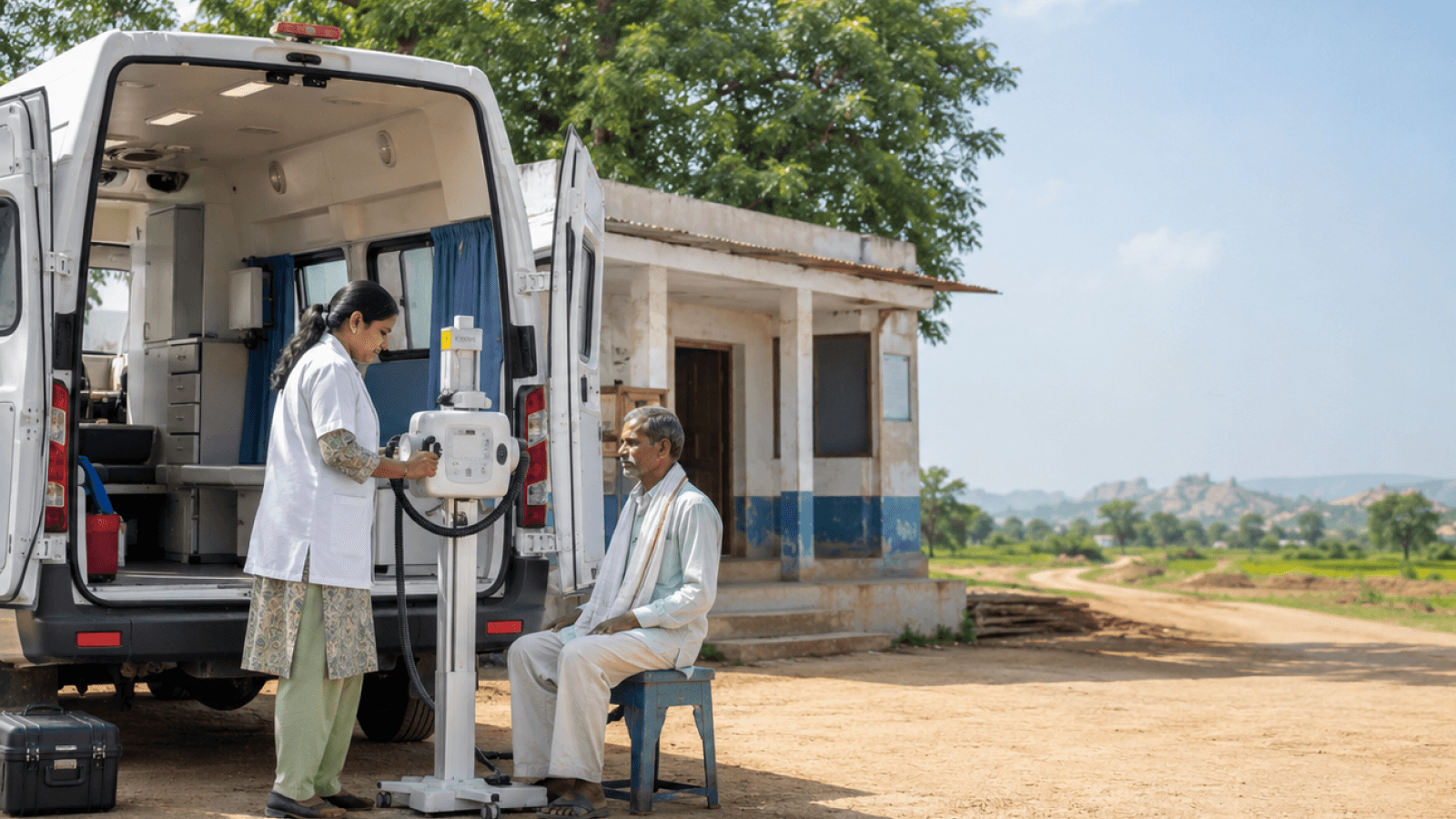
For most of India's rural population, a radiology department means a day of travel. The nearest district hospital may be 40 kilometres away. If the hospital's X-ray machine is down, or if it operates only during daytime hours, that gap doubles.
India's National Health Mission was partly designed to close this gap. One of its less-discussed consequences is a growing requirement for portable, mobile diagnostic equipment that can function where fixed infrastructure cannot.
What the National Health Mission Actually Does
The National Health Mission (NHM) is India's flagship public health programme, operating through two sub-missions: National Rural Health Mission (NRHM) for rural districts and National Urban Health Mission (NUHM) for underserved urban areas.
NHM funds a wide range of healthcare infrastructure, primary health centres, community health centres, mobile health units, and disease control programmes, including the Revised National TB Control Programme. It is one of the largest public health programmes in the world by reach, covering over 700 districts across India.
At a practical level, NHM procurement drives a significant portion of medical equipment purchasing in India's public health system. State health departments procure equipment under NHM guidelines, and those guidelines increasingly specify the diagnostic capabilities required at the PHC and mobile unit level.
The Diagnostic Gap NHM Is Trying to Close
India has approximately 25,000 functional primary health centres. The large majority of them lack diagnostic imaging capability. They can take a patient's history, conduct a physical examination, and refer, but they cannot image.
This creates a predictable problem. Chest infections that might resolve with appropriate early treatment go undiagnosed until they are advanced. Fractures are missed or managed without imaging confirmation. TB detection, which requires a chest X-ray as a standard part of diagnosis, is delayed.
The NHM framework recognises this gap. Several state-level NHM programmes have begun specifying portable diagnostic imaging equipment for PHC-level deployment and mobile health units precisely because fixed X-ray installation at every PHC is not financially viable.
Mobile Health Units and What They Actually Need
NHM-funded mobile health units (MHUs) are van-based or vehicle-mounted clinical teams that operate regular circuits through villages and remote settlements not served by a fixed health facility.
The clinical brief for an MHU typically covers primary care, maternal and child health, and disease screening. For any of this to include diagnostic imaging, the equipment has to meet three constraints that fixed X-ray systems cannot satisfy:
Power independence — no reliable mains power at field sites
Portability — must fit in a vehicle with other clinical equipment and supplies
Operator simplicity — MHU staff are typically general health workers, not trained radiographers
Battery-operated portable X-ray systems address all three. AERB-approved units weighing under 3.2kg, delivering 150 or more exposures per charge, with pre-programmed APR modes for standard anatomical positions — these remove the operational barriers that kept imaging out of mobile health programmes.
TB Screening: The Highest-Volume Use Case
India accounts for roughly one-quarter of global TB cases. The country's elimination strategy under the National TB Elimination Programme (NTEP) depends heavily on active case finding identifying TB in populations who have not yet sought care, rather than waiting for symptomatic patients to present.
Active case finding requires chest X-ray screening at scale in high-risk communities. Urban slums, migrant worker populations, tribal settlements, and districts with high HIV prevalence are priority targets.
This cannot be done from a fixed radiology department. The populations at highest risk are the ones least likely to travel to an urban hospital for screening. Mobile X-ray screening using portable, battery-operated equipment is the only operationally viable approach for this type of outreach.
Several state NHM programmes have already begun procuring portable X-ray equipment specifically for TB active case finding under NTEP. This is likely to expand as the 2025 TB elimination target creates pressure for more aggressive screening coverage.
What NHM Procurement Officers Look for in Equipment
State health departments procuring under NHM guidelines have specific requirements that differ from private hospital procurement. Understanding these helps suppliers and procurement teams align their evaluation criteria.
AERB approval — mandatory, no exceptions
Make in India certification — preferred and sometimes required under the domestic procurement policy
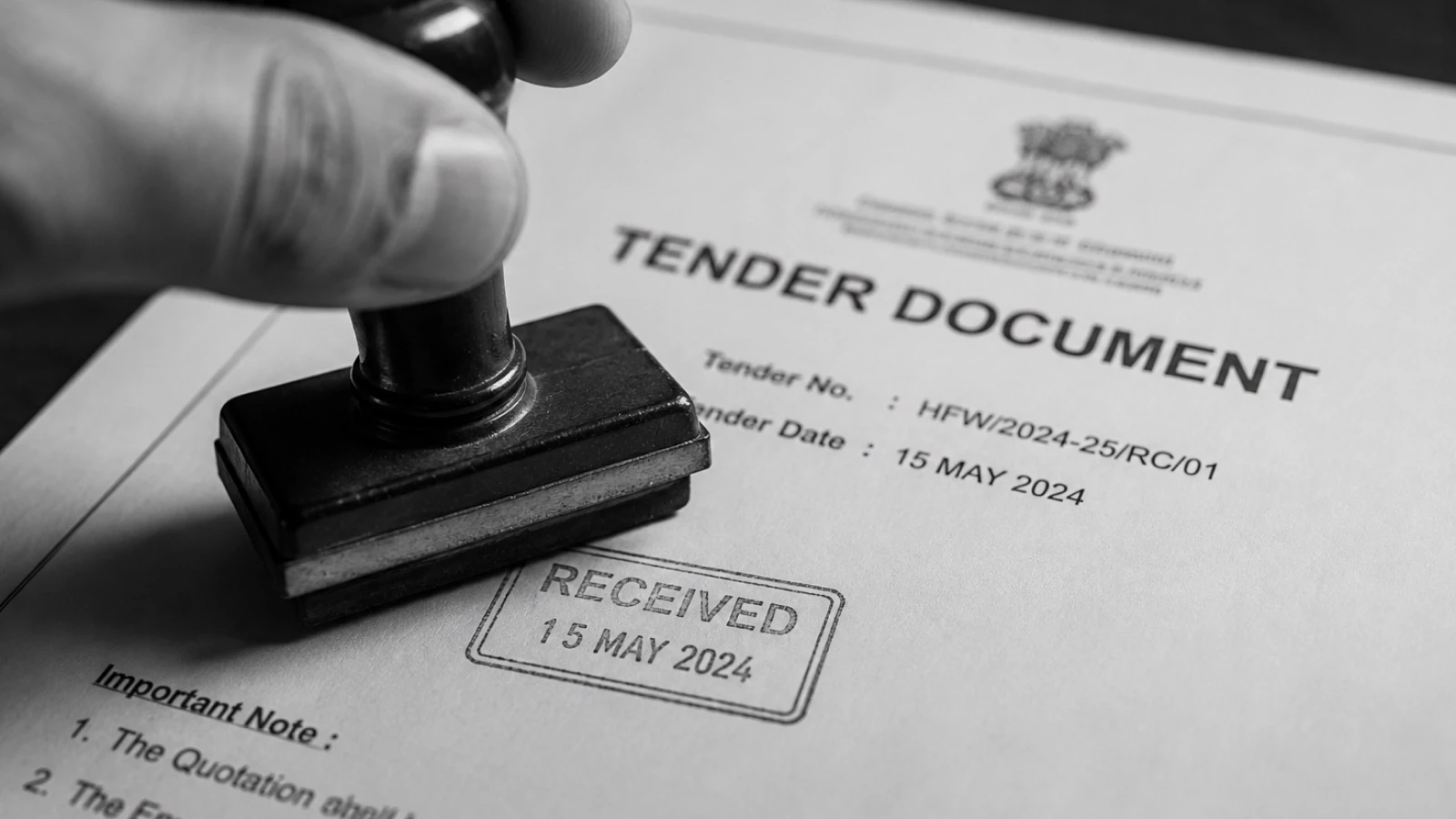
Compliance with tender technical specifications — which typically include minimum kV range, mA output, and APR mode count
Service network in the deployment state — remote districts need local service capability
Availability on GeM portal — the Government e-Marketplace, which many state procurements now use as the default channel
Warranty terms and AMC pricing — multi-year commitments are common for government contracts
Manufacturers without a local service presence, or without Make in India certification, typically fail on at least one of these criteria in competitive government tenders.
What This Means for Medical Equipment Suppliers
The NHM-driven demand for portable diagnostic equipment is not a niche. It represents a significant and growing procurement channel across all 28 states and 8 union territories.
State health departments are not buying one or two devices. District-level deployments often involve procurement of 10–50 units per tender, with additional maintenance contracts. Suppliers who are not positioned for government procurement, who lack GeM registration, Make in India certification, and local service infrastructure, are effectively absent from this market.
Humanic India's portable X-ray range is AERB-approved, Made in India, and designed for the operational conditions of NHM deployment: field-ready, battery-operated, and supportable by a locally based service network.
Frequently Asked Questions
Q: What is the NHM programme and how does it affect medical equipment procurement?
A: The National Health Mission (NHM) is India's main public health funding programme, covering rural and urban health infrastructure. It funds the procurement of medical equipment for government PHCs, district hospitals, and mobile health units across all states. NHM procurement represents a major channel for medical equipment suppliers in India.
Q: Why is portable X-ray equipment specifically important for NHM programmes?
A: NHM-funded mobile health units and rural PHCs typically lack the stable power supply, shielded rooms, and specialist staff required for fixed X-ray installation. Portable, battery-operated systems address these constraints and enable imaging at PHC level and in field deployments.
Q: What certifications does a portable X-ray machine need for government procurement in India?
A: AERB type approval is mandatory. Make in India certification is required or strongly preferred under domestic procurement policy. ISO 13485:2016 and GMP certifications are standard requirements in technical specifications. GeM portal registration enables access to state and central government procurement channels.
Q: Is Humanic India's equipment available for NHM programme procurement?
A: Yes. Humanic India's portable X-ray systems are AERB-approved, Made in India certified, and suitable for NHM programme procurement. For tender documentation, compliance certificates, or GeM procurement queries, contact Humanic India through humanicindia.com/contact.
For most of India's rural population, a radiology department means a day of travel. The nearest district hospital may be 40 kilometres away. If the hospital's X-ray machine is down, or if it operates only during daytime hours, that gap doubles.
India's National Health Mission was partly designed to close this gap. One of its less-discussed consequences is a growing requirement for portable, mobile diagnostic equipment that can function where fixed infrastructure cannot.
What the National Health Mission Actually Does
The National Health Mission (NHM) is India's flagship public health programme, operating through two sub-missions: National Rural Health Mission (NRHM) for rural districts and National Urban Health Mission (NUHM) for underserved urban areas.
NHM funds a wide range of healthcare infrastructure, primary health centres, community health centres, mobile health units, and disease control programmes, including the Revised National TB Control Programme. It is one of the largest public health programmes in the world by reach, covering over 700 districts across India.
At a practical level, NHM procurement drives a significant portion of medical equipment purchasing in India's public health system. State health departments procure equipment under NHM guidelines, and those guidelines increasingly specify the diagnostic capabilities required at the PHC and mobile unit level.
The Diagnostic Gap NHM Is Trying to Close
India has approximately 25,000 functional primary health centres. The large majority of them lack diagnostic imaging capability. They can take a patient's history, conduct a physical examination, and refer, but they cannot image.
This creates a predictable problem. Chest infections that might resolve with appropriate early treatment go undiagnosed until they are advanced. Fractures are missed or managed without imaging confirmation. TB detection, which requires a chest X-ray as a standard part of diagnosis, is delayed.
The NHM framework recognises this gap. Several state-level NHM programmes have begun specifying portable diagnostic imaging equipment for PHC-level deployment and mobile health units precisely because fixed X-ray installation at every PHC is not financially viable.
Mobile Health Units and What They Actually Need
NHM-funded mobile health units (MHUs) are van-based or vehicle-mounted clinical teams that operate regular circuits through villages and remote settlements not served by a fixed health facility.
The clinical brief for an MHU typically covers primary care, maternal and child health, and disease screening. For any of this to include diagnostic imaging, the equipment has to meet three constraints that fixed X-ray systems cannot satisfy:
Power independence — no reliable mains power at field sites
Portability — must fit in a vehicle with other clinical equipment and supplies
Operator simplicity — MHU staff are typically general health workers, not trained radiographers
Battery-operated portable X-ray systems address all three. AERB-approved units weighing under 3.2kg, delivering 150 or more exposures per charge, with pre-programmed APR modes for standard anatomical positions — these remove the operational barriers that kept imaging out of mobile health programmes.
TB Screening: The Highest-Volume Use Case
India accounts for roughly one-quarter of global TB cases. The country's elimination strategy under the National TB Elimination Programme (NTEP) depends heavily on active case finding identifying TB in populations who have not yet sought care, rather than waiting for symptomatic patients to present.
Active case finding requires chest X-ray screening at scale in high-risk communities. Urban slums, migrant worker populations, tribal settlements, and districts with high HIV prevalence are priority targets.
This cannot be done from a fixed radiology department. The populations at highest risk are the ones least likely to travel to an urban hospital for screening. Mobile X-ray screening using portable, battery-operated equipment is the only operationally viable approach for this type of outreach.
Several state NHM programmes have already begun procuring portable X-ray equipment specifically for TB active case finding under NTEP. This is likely to expand as the 2025 TB elimination target creates pressure for more aggressive screening coverage.
What NHM Procurement Officers Look for in Equipment
State health departments procuring under NHM guidelines have specific requirements that differ from private hospital procurement. Understanding these helps suppliers and procurement teams align their evaluation criteria.
AERB approval — mandatory, no exceptions
Make in India certification — preferred and sometimes required under the domestic procurement policy
Compliance with tender technical specifications — which typically include minimum kV range, mA output, and APR mode count
Service network in the deployment state — remote districts need local service capability
Availability on GeM portal — the Government e-Marketplace, which many state procurements now use as the default channel
Warranty terms and AMC pricing — multi-year commitments are common for government contracts
Manufacturers without a local service presence, or without Make in India certification, typically fail on at least one of these criteria in competitive government tenders.
What This Means for Medical Equipment Suppliers
The NHM-driven demand for portable diagnostic equipment is not a niche. It represents a significant and growing procurement channel across all 28 states and 8 union territories.
State health departments are not buying one or two devices. District-level deployments often involve procurement of 10–50 units per tender, with additional maintenance contracts. Suppliers who are not positioned for government procurement, who lack GeM registration, Make in India certification, and local service infrastructure, are effectively absent from this market.
Humanic India's portable X-ray range is AERB-approved, Made in India, and designed for the operational conditions of NHM deployment: field-ready, battery-operated, and supportable by a locally based service network.
Frequently Asked Questions
Q: What is the NHM programme and how does it affect medical equipment procurement?
A: The National Health Mission (NHM) is India's main public health funding programme, covering rural and urban health infrastructure. It funds the procurement of medical equipment for government PHCs, district hospitals, and mobile health units across all states. NHM procurement represents a major channel for medical equipment suppliers in India.
Q: Why is portable X-ray equipment specifically important for NHM programmes?
A: NHM-funded mobile health units and rural PHCs typically lack the stable power supply, shielded rooms, and specialist staff required for fixed X-ray installation. Portable, battery-operated systems address these constraints and enable imaging at PHC level and in field deployments.
Q: What certifications does a portable X-ray machine need for government procurement in India?
A: AERB type approval is mandatory. Make in India certification is required or strongly preferred under domestic procurement policy. ISO 13485:2016 and GMP certifications are standard requirements in technical specifications. GeM portal registration enables access to state and central government procurement channels.
Q: Is Humanic India's equipment available for NHM programme procurement?
A: Yes. Humanic India's portable X-ray systems are AERB-approved, Made in India certified, and suitable for NHM programme procurement. For tender documentation, compliance certificates, or GeM procurement queries, contact Humanic India through humanicindia.com/contact.
Get in touch for detailed information about our product and services
Get in touch for detailed information about our product and services


Address:
E-21, Ground Floor, B-1 Ext., Mohan Cooperative Industrial Estate, Mathura Road, Badarpur,
New Delhi - 110044, India
Phone
(WhatsApp):
+91-9990455744
Email:
Address:
E-21, Ground Floor, B-1 Ext.,
Mohan Cooperative Industrial Estate, Mathura Road, Badarpur,
New Delhi - 110044, India
Phone
(WhatsApp):
+91-9990455744
Email:
Address:
E-21, Ground Floor, B-1 Ext., Mohan Cooperative
Industrial Estate,
Mathura Road, Badarpur,
New Delhi - 110044, India
Phone
(WhatsApp):
+91-9990455744
Email: