Portable X-Ray Machine Price in India
Portable X-Ray Machine Price in India
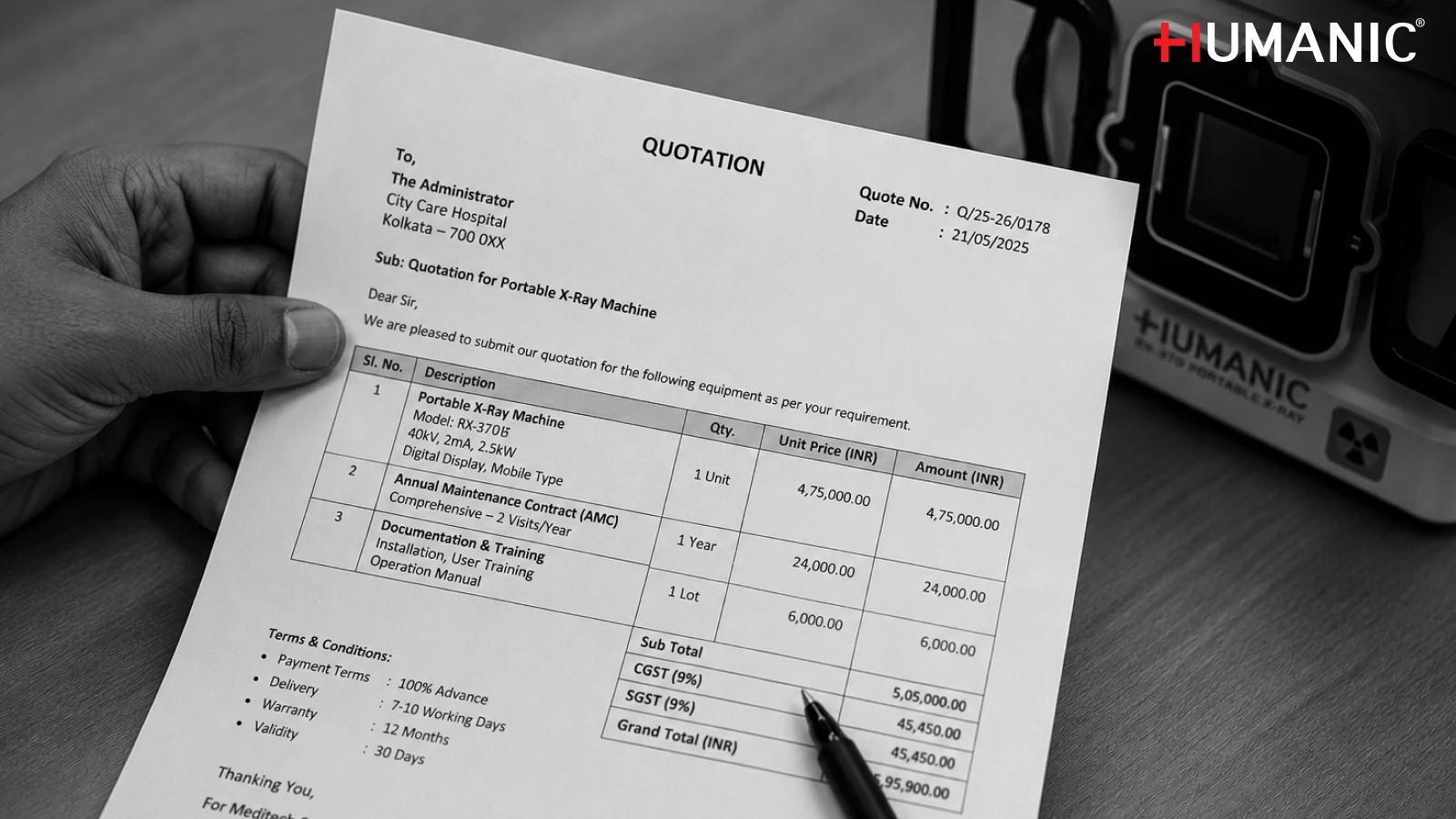
Most pricing pages for medical equipment either hide the number entirely or quote a single figure with no context. Neither is useful if you’re the one building a budget. Portable X-ray machine prices in India vary by a wide margin depending on five factors: power output, battery and imaging technology, certification and documentation, service coverage, and whether the unit is imported or made domestically. Understanding those five factors matters more than any single price point, because they determine what you’re actually paying for.
The five factors that set the price
Power output (kVp and mA range). Entry-level portable systems built for general radiography (chest, extremities, basic trauma imaging) sit at the lower end of the power range. Higher-output systems capable of denser tissue and larger-body imaging cost more, because they need a stronger generator and a bigger battery to support it.
Battery and portability engineering.
A unit that delivers 150+ exposures per charge in a package under 3.2 kg isn’t just a marketing spec, that’s meaningfully more battery and thermal engineering than a heavier, shorter-life system. Field-ready portability is a real cost driver, not a feature you get for free.
AERB certification and documentation.
AERB type approval is mandatory in India, and a properly certified unit with complete documentation costs more to bring to market than one without it. This is one area where a lower price is a red flag, not a bargain an uncertified or incompletely documented system creates liability for the buyer, not just the seller.
Service and support network.
A five-year AMC with local technician coverage costs more upfront than “we’ll ship you a part if something breaks.” For hospitals and government programmes running equipment daily, service network coverage is often the single biggest factor in total cost of ownership, even though it doesn’t show up in the sticker price.
Imported vs. Made-in-India.
Imported systems typically carry a premium from import duty, longer logistics for parts and service, and currency exposure. Domestically manufactured, AERB-approved systems avoid most of that premium while meeting the same regulatory bar which is a large part of why Make-in-India preference exists in government procurement in the first place.
Total cost of ownership, not just purchase price
Cost factor | What to check |
|---|---|
Purchase price | Base unit cost, including standard accessories |
AMC / service contract | Annual cost, response time SLA, parts coverage |
Consumables & parts | Detector panel replacement cost, battery replacement cycle |
Training | Included or billed separately for operator certification |
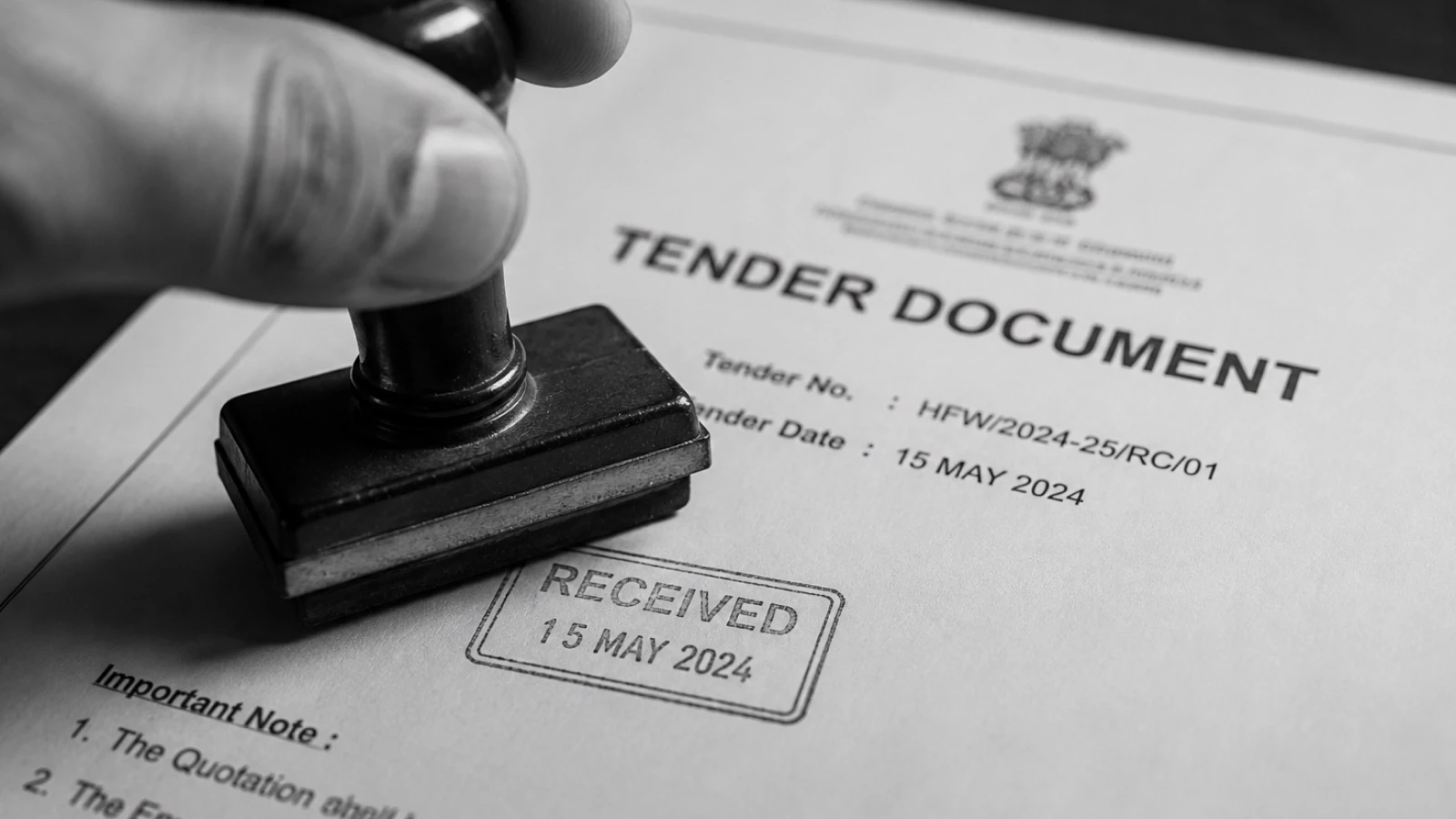
Documentation | AERB compliance package, tender-ready paperwork included or extra |
Import/logistics | Customs, freight, and lead time on replacement parts (imported units only) |
A lower purchase price with a thin service network and expensive imported parts frequently costs more over five years than a higher purchase price with a strong local AMC. This is the calculation procurement teams should run before comparing sticker prices side by side.
Getting an accurate quote
Because output requirements, service needs, and deployment environment (hospital, mobile unit, field programme) all affect the final price, an accurate number requires a short conversation about your specific use case rather than a generic list price. Humanic India’s RX series spans five models (RX 90 through RX 910) at different power tiers, so pricing scales with what you actually need rather than a single one-size number.
Frequently Asked Questions
Is a cheaper portable X-ray machine always a worse deal?
Not necessarily, but a price significantly below market for a given power tier is worth scrutinising closely check specifically whether AERB certification, documentation, and service coverage match what higher-priced competitors include.
Does Make-in-India pricing mean lower quality?
No. Make-in-India manufacturing avoids import duty and long parts-logistics chains, which lowers cost without requiring a change in build quality or certification standard — AERB approval applies equally to domestic and imported systems.
What’s typically included in the quoted price vs. billed separately?
This varies by supplier. Always confirm whether AMC, operator training, and compliance documentation are bundled into the quote or billed as add-ons before comparing two quotes directly.
How much does battery life affect price?
Meaningfully. A system rated for 150+ exposures per charge requires more battery and thermal engineering than a shorter-life system, and that engineering cost is reflected in the price.
Most pricing pages for medical equipment either hide the number entirely or quote a single figure with no context. Neither is useful if you’re the one building a budget. Portable X-ray machine prices in India vary by a wide margin depending on five factors: power output, battery and imaging technology, certification and documentation, service coverage, and whether the unit is imported or made domestically. Understanding those five factors matters more than any single price point, because they determine what you’re actually paying for.
The five factors that set the price
Power output (kVp and mA range). Entry-level portable systems built for general radiography (chest, extremities, basic trauma imaging) sit at the lower end of the power range. Higher-output systems capable of denser tissue and larger-body imaging cost more, because they need a stronger generator and a bigger battery to support it.
Battery and portability engineering.
A unit that delivers 150+ exposures per charge in a package under 3.2 kg isn’t just a marketing spec, that’s meaningfully more battery and thermal engineering than a heavier, shorter-life system. Field-ready portability is a real cost driver, not a feature you get for free.
AERB certification and documentation.
AERB type approval is mandatory in India, and a properly certified unit with complete documentation costs more to bring to market than one without it. This is one area where a lower price is a red flag, not a bargain an uncertified or incompletely documented system creates liability for the buyer, not just the seller.
Service and support network.
A five-year AMC with local technician coverage costs more upfront than “we’ll ship you a part if something breaks.” For hospitals and government programmes running equipment daily, service network coverage is often the single biggest factor in total cost of ownership, even though it doesn’t show up in the sticker price.
Imported vs. Made-in-India.
Imported systems typically carry a premium from import duty, longer logistics for parts and service, and currency exposure. Domestically manufactured, AERB-approved systems avoid most of that premium while meeting the same regulatory bar which is a large part of why Make-in-India preference exists in government procurement in the first place.
Total cost of ownership, not just purchase price
Cost factor | What to check |
|---|---|
Purchase price | Base unit cost, including standard accessories |
AMC / service contract | Annual cost, response time SLA, parts coverage |
Consumables & parts | Detector panel replacement cost, battery replacement cycle |
Training | Included or billed separately for operator certification |
Documentation | AERB compliance package, tender-ready paperwork included or extra |
Import/logistics | Customs, freight, and lead time on replacement parts (imported units only) |
A lower purchase price with a thin service network and expensive imported parts frequently costs more over five years than a higher purchase price with a strong local AMC. This is the calculation procurement teams should run before comparing sticker prices side by side.
Getting an accurate quote
Because output requirements, service needs, and deployment environment (hospital, mobile unit, field programme) all affect the final price, an accurate number requires a short conversation about your specific use case rather than a generic list price. Humanic India’s RX series spans five models (RX 90 through RX 910) at different power tiers, so pricing scales with what you actually need rather than a single one-size number.
Frequently Asked Questions
Is a cheaper portable X-ray machine always a worse deal?
Not necessarily, but a price significantly below market for a given power tier is worth scrutinising closely check specifically whether AERB certification, documentation, and service coverage match what higher-priced competitors include.
Does Make-in-India pricing mean lower quality?
No. Make-in-India manufacturing avoids import duty and long parts-logistics chains, which lowers cost without requiring a change in build quality or certification standard — AERB approval applies equally to domestic and imported systems.
What’s typically included in the quoted price vs. billed separately?
This varies by supplier. Always confirm whether AMC, operator training, and compliance documentation are bundled into the quote or billed as add-ons before comparing two quotes directly.
How much does battery life affect price?
Meaningfully. A system rated for 150+ exposures per charge requires more battery and thermal engineering than a shorter-life system, and that engineering cost is reflected in the price.
Get in touch for detailed information about our product and services
Get in touch for detailed information about our product and services


Address:
E-21, Ground Floor, B-1 Ext., Mohan Cooperative Industrial Estate, Mathura Road, Badarpur,
New Delhi - 110044, India
Phone
(WhatsApp):
+91-9990455744
Email:
Address:
E-21, Ground Floor, B-1 Ext.,
Mohan Cooperative Industrial Estate, Mathura Road, Badarpur,
New Delhi - 110044, India
Phone
(WhatsApp):
+91-9990455744
Email:
Address:
E-21, Ground Floor, B-1 Ext., Mohan Cooperative
Industrial Estate,
Mathura Road, Badarpur,
New Delhi - 110044, India
Phone
(WhatsApp):
+91-9990455744
Email: